Recent Publications
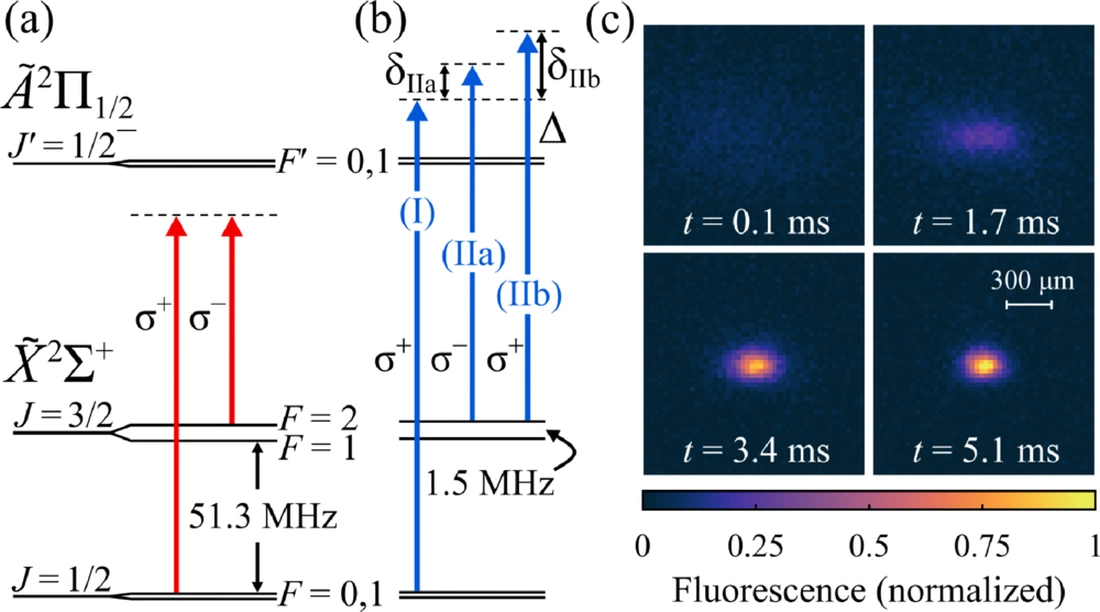
High-sensitivity molecular spectroscopy of SrOH using magneto-optical trapping
Polyatomic molecules are projected to be powerful tools in searches for physics beyond the Standard Model (BSM), including new …
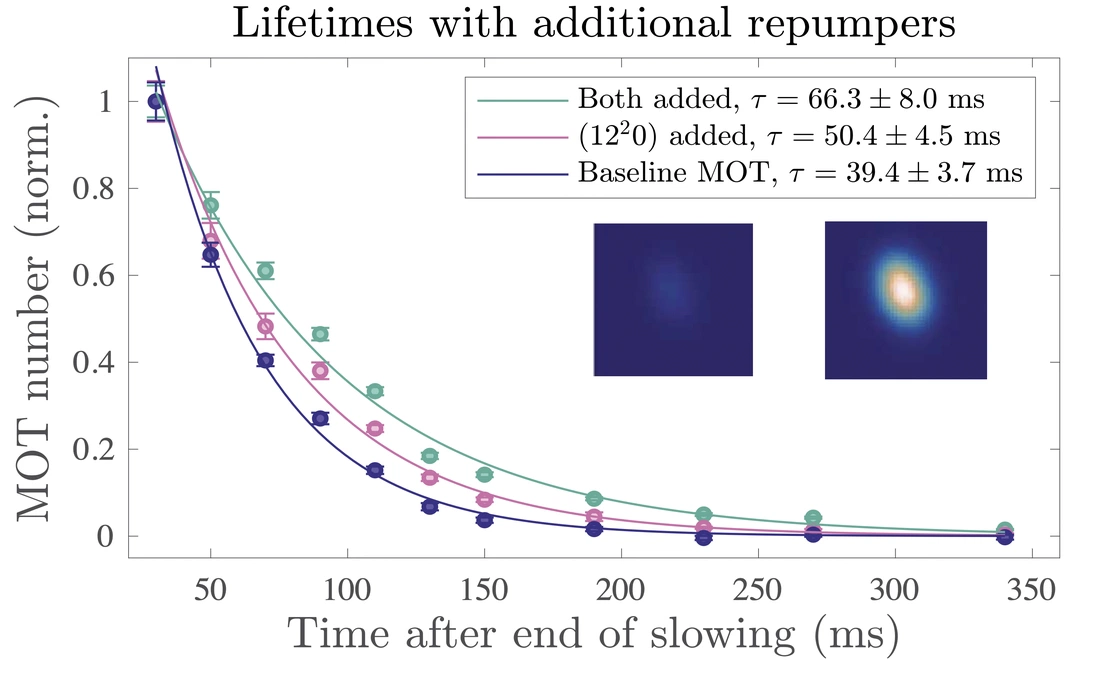
High Compression Blue-Detuned Magneto-Optical Trap of Polyatomic Molecules
We demonstrate a blue-detuned magneto-optical trap (MOT) of a polyatomic molecule, calcium monohydroxide (CaOH). We identify a novel …
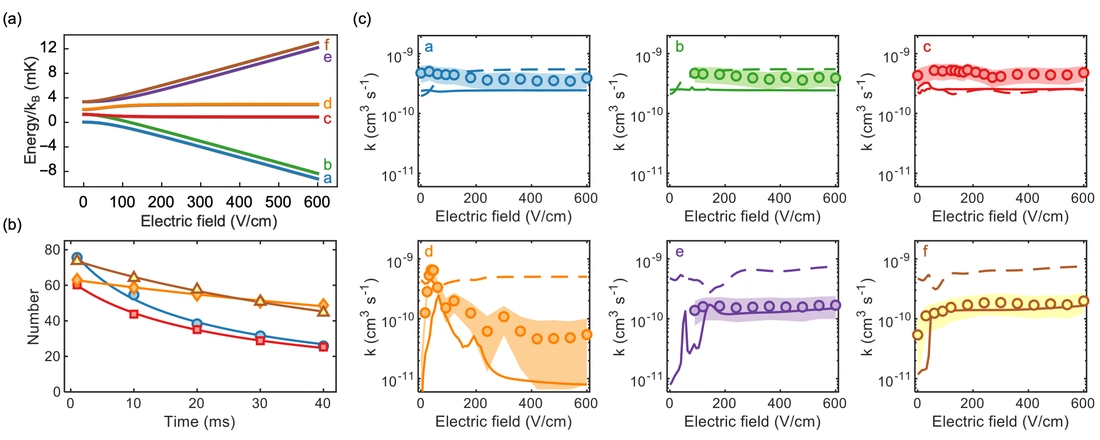
Quantum-State-Controlled Collisions of Ultracold Polyatomic Molecules
Collisions between ultracold calcium monohydroxide (CaOH) molecules are realized and studied. Inelastic collision rate constants are …
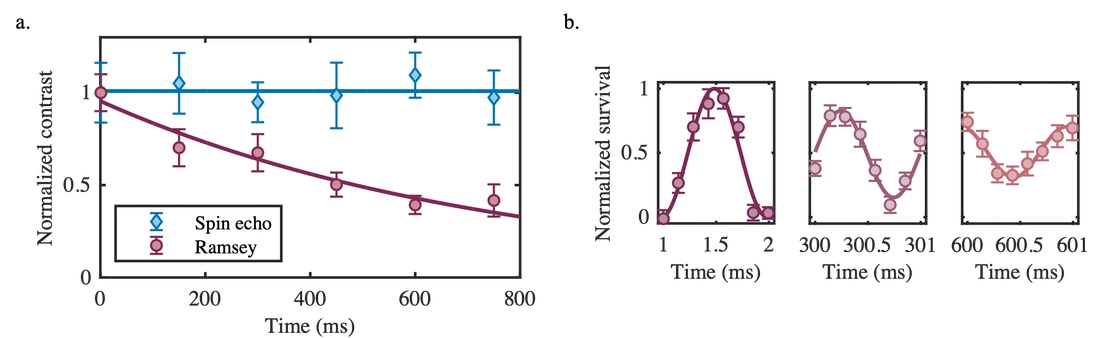
Parity-Doublet Coherence Times in Optically Trapped Polyatomic Molecules
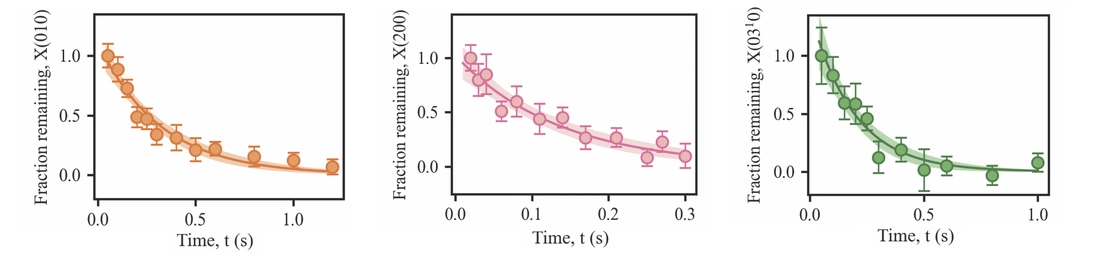
Polyatomic molecules provide complex internal structures that are ideal for applications in quantum information science, quantum …
Optical Trapping of SrOH Molecules for Dark Matter and T-violation Searches
We report an optical dipole trap of strontium monohydroxide (SrOH) with 1400(300) trapped molecules. Through optical pumping, we access …
Recent Preprints
Parity-doublet spin interactions in ultracold polyatomic molecules
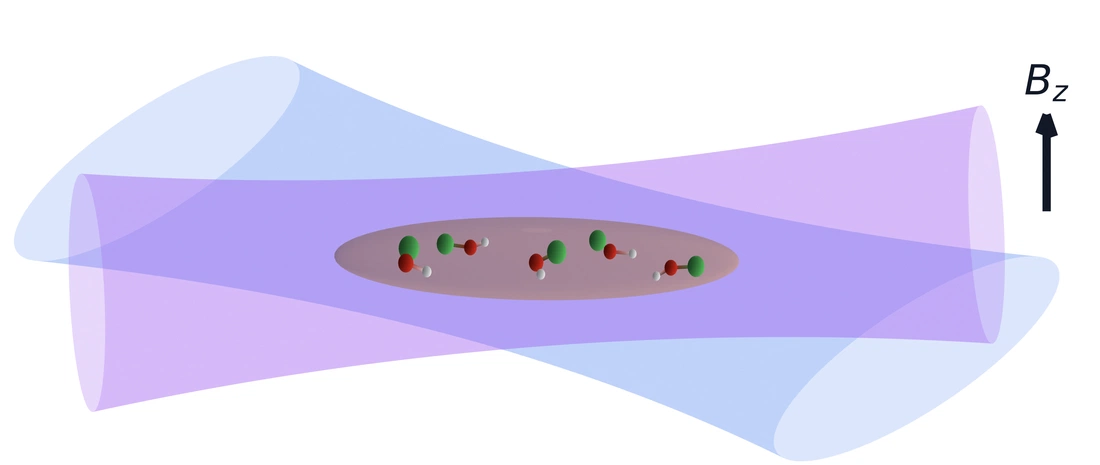
Precision measurements exploit internal molecular structure to search for physics beyond the Standard Model. Reaching the …

Compact Actively-Shielded Magnetic Field Coil within Mu-Metal Shields for ACME Electric Dipole Moment Measurements
A system of actively-shielded coils and mu-metal shields is devised, constructed and shown to provide the stable and spatially uniform …
Order of Magnitude Improved Optical Trapping of Molecules Through Transverse Cooling
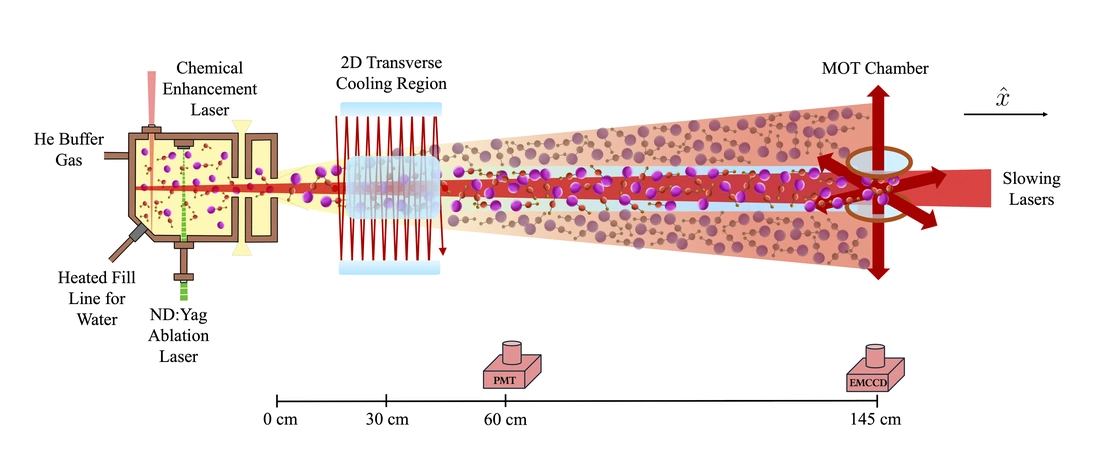
We demonstrate a two-dimensional Sisyphus laser cooling method that increases the number of strontium monohydroxide (SrOH) molecules …
Design and Performance of a Heated Gas Injector for Producing Cold Molecular Beams
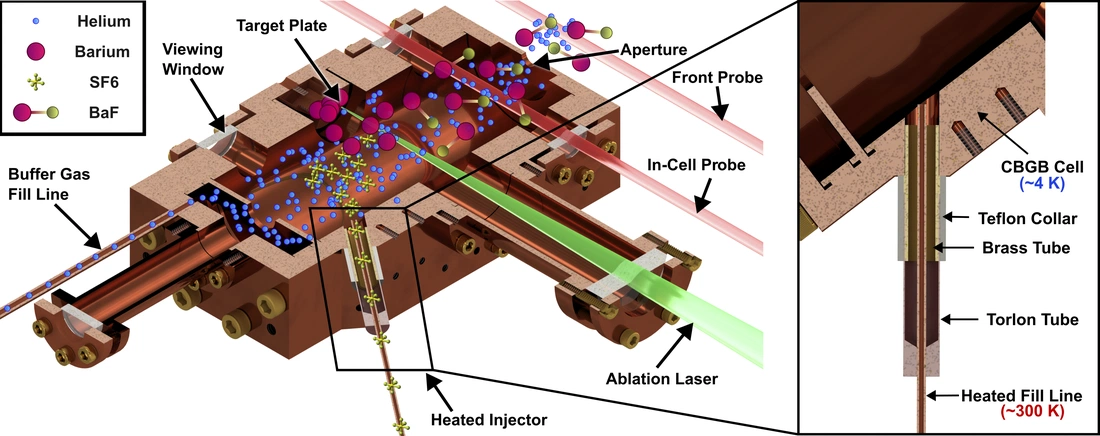
We realize an injector device that supplies warm gas directly into a cryogenic environment. This injector has several advantageous …

Photon Cycling and Laser Cooling of an Asymmetric Top Molecule
We realize two-dimensional magnetically-assisted Sisyphus laser cooling of an asymmetric top molecule (ATM), calcium monoamide (CaNH2). …
Popular Articles
Spectroscopy of Radioactive Molecules
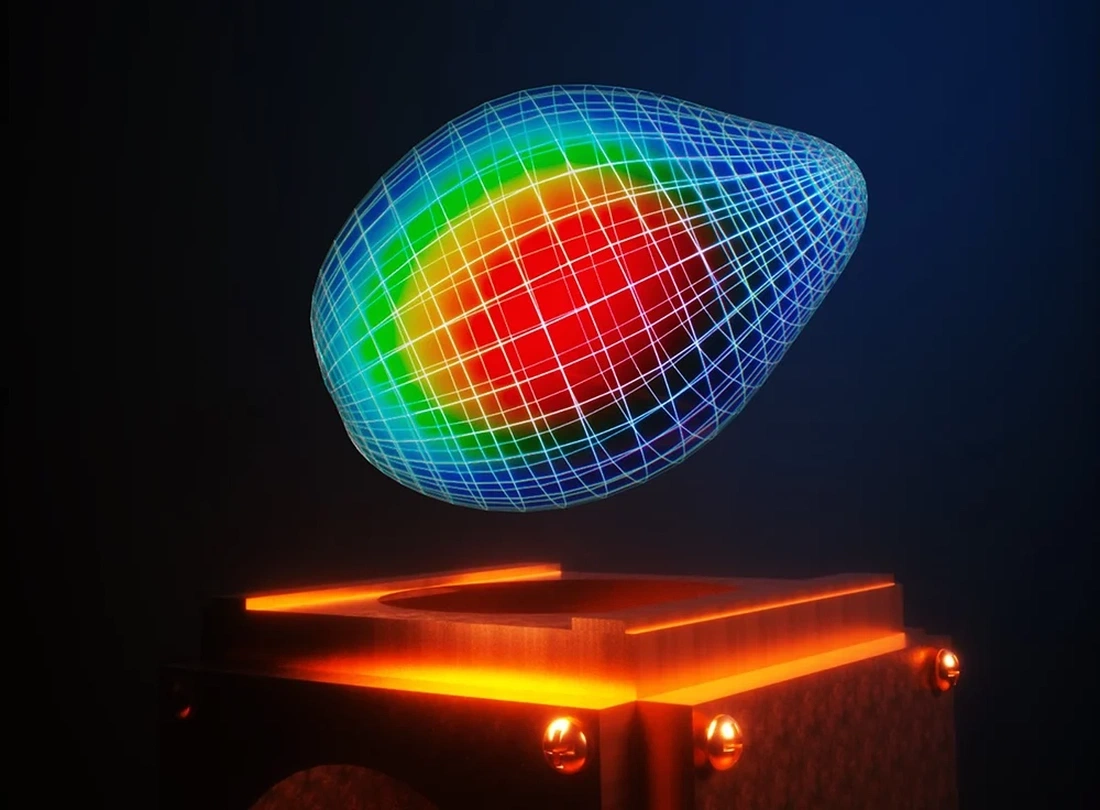
Our work on the spectroscopy of RaF and RaOH molecules is featured in Physics magazine.
Our collaborators at Caltech (Hutzler group) produced and performed high-resolution spectroscopy on cold radioactive $^{226}$RaF, $^{226}$RaOH, and $^{226}$RaOD molecules in a tabletop cryogenic apparatus, starting from just 10–50 μCi samples of $^{226}$Ra. See the paper here!
Quantum science with polyatomic molecules
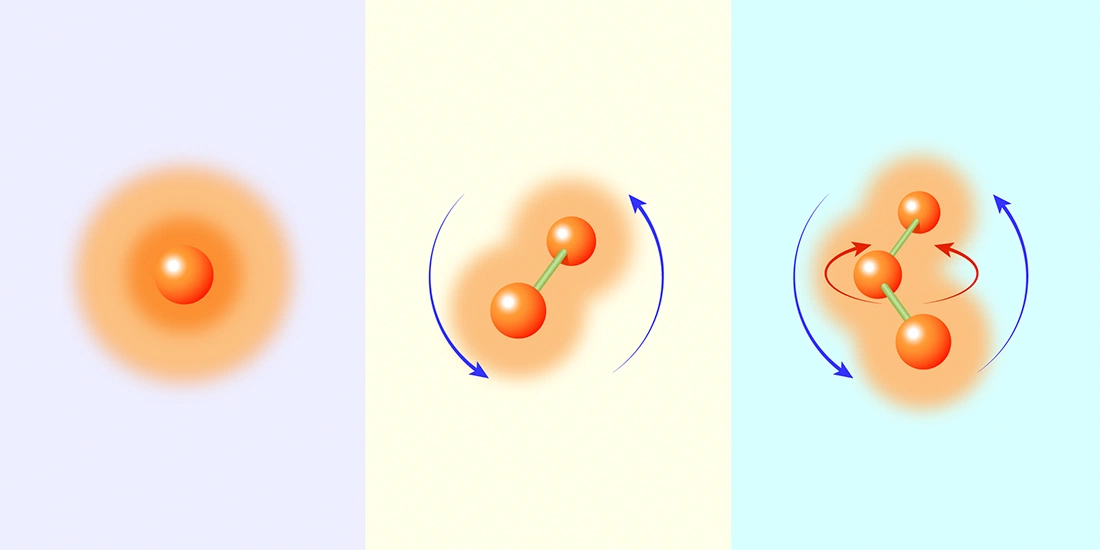
Our work on conveyer-belt MOTs and characterizing collisions of polyatomic molecules is featured in Physics magazine.
Ultracold gases have been a cornerstone of modern physics, advancing fundamental physics, quantum simulation, quantum computation, atomic clocks, and quantum sensing. Recently, the family of ultracold gases has expanded to include diatomic molecules made of two atomic species. Their additional degrees of freedom of vibration and rotation add experimental complexity, while their unique features, such as strong dipolar interactions, expand their scientific scope far beyond ultracold atoms. Polyatomic molecules—those with three or more atoms—are the next frontier. Although they require control over more vibrational and rotational modes, they have properties that can be exploited to build the next generation of fundamental physics sensors, quantum computers, and simulators [1, 2]. Christian Hallas and Nathaniel Vilas from Harvard University and their colleagues have shown that they can trap polyatomic molecules at high densities and ultracold temperatures, enabling them to observe and control collisions between these molecules [3, 4]. These are important milestones toward creating gases of polyatomic molecules that are dense enough to unleash their full quantum nature.
Vibrational branching fractions for laser cooling of Sr-containing nonlinear molecules
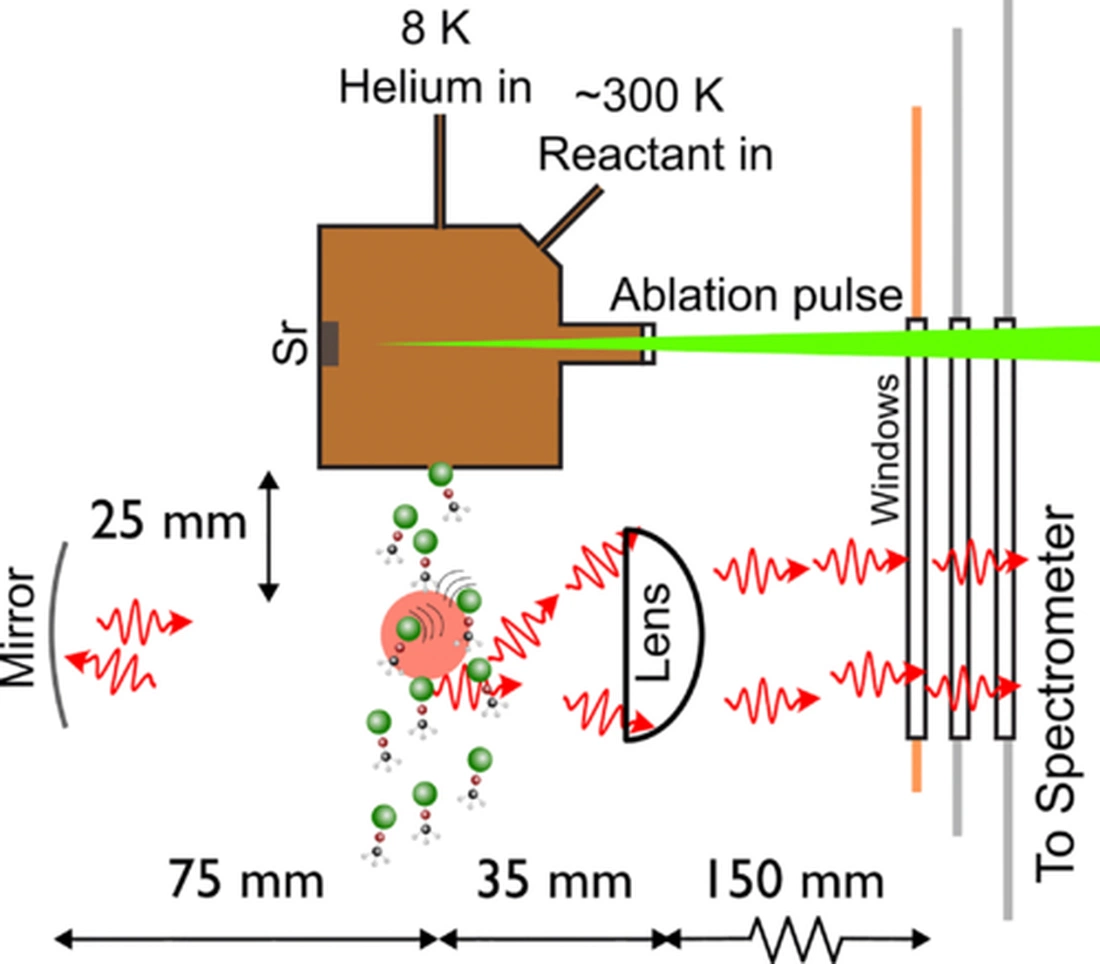
Paper by Alex and Zack (with collaborator Lan Cheng) has been featured in Editor’s Suggestion on PRA.
The authors explore candidates for a next-generation search for the electron electric dipole moment (eEDM) by experimentally measuring the vibrational loss channels in three Sr-containing nonlinear molecules. They conclude that SrNH2 is the optimal choice for a future laser-cooled molecule-based eEDM experiment.
Individual polyatomic molecules are trapped in optical tweezer arrays
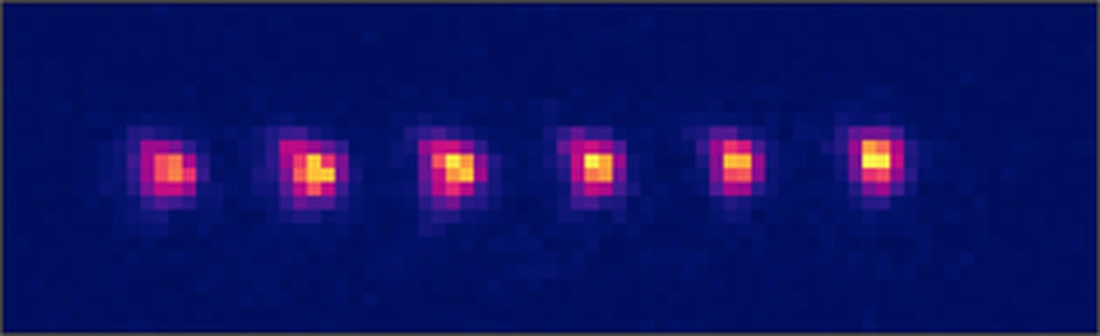
Our results on an optical tweezer array of ultracold polyatomic molecules demonstrate control of polyatomic molecules (CaOH) at the single particle, single internal quantum state level. The ability to create and manipulate tweezer arrays of polyatomic molecules paves the way for a variety of experiments harnessing the rich structure of these molecules, including quantum simulation, quantum computation, and precision studies of ultracold collisions and chemistry. Check out popular news coverage of this work in Physics World and Phys.org. Also see the Nature Research Briefing on this article.

Entangle a pair of single diatomic molecules in tweezers
December 2023: Our results on dipolar spin-exchange and entanglement between molecules in an optical tweezer array demonstrate entangling a pair of single CaF molecules using dipolar interaction. This observation opens the possibility of using molecular tweezer array as a platform for quantum computations and quantum simulations. The manuscript is published back-to-back with the work from Lawrence Cheuk’s group. Check out popular news coverage of this work in Physics Today, Nature News and Science Perspective.